Context
09.Context
01.context介绍
1.1 context由来
- context在Go1.7之后就进入标准库中了,是在于
控制goroutine的生命周期。 - 由于在Golang severs中,每个request都是在单个goroutine中完成
- 并且在单个goroutine(不妨称之为A)中也会有请求其他服务(启动另一个goroutine(称之为B)去完成)的场景
- 这就会涉及多个Goroutine之间的调用
- 如果某一时刻请求其他服务被取消或者超时,则作为深陷其中的当前goroutine B需要立即退出,然后系统才可回收B所占用的资源。
- 即一个request中通常包含多个goroutine,这些goroutine之间通常会有交互。
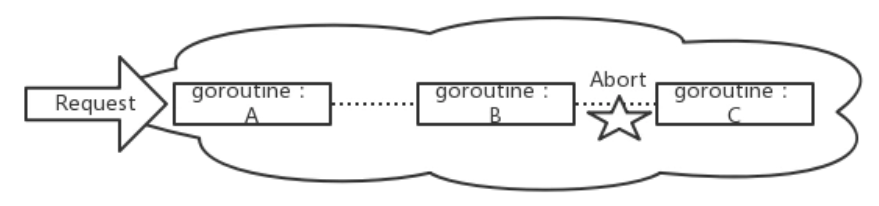
- 那么,如何有效管理这些goroutine成为一个问题(主要是退出通知和元数据传递问题)
- Google的解决方法是Context机制,相互调用的goroutine之间通过传递context变量保持关联
- 这样在不用暴露各goroutine内部实现细节的前提下,有效地控制各goroutine的运行。

- 如此一来,通过传递Context就可以追踪goroutine调用树,并在这些调用树之间传递通知和元数据。
- 虽然goroutine之间是平行的,没有继承关系,但是Context设计成是包含父子关系的,这样可以更好的描述goroutine调用之间的树型关系。
1.2 context常用方法
context.Context是一个接口,该接口定义了四个需要实现的方法
1 | type Context interface { |
- Done 方法
- 在Context被取消或超时时返回一个close的channel,close的channel可以作为广播通知
- 告诉给context相关的函数要停止当前工作然后返回。
- 当一个父operation启动一个goroutine用于子operation,这些子operation不能够取消父operation。
- 下面描述的WithCancel函数提供一种方式可以取消新创建的Context.
- 开发者可以把一个Context传递给任意多个goroutine然后cancel这个context的时候就能够通知到所有的goroutine。
- Err方法
- 返回context为什么被取消
- Deadline
- 返回context何时会超时。
- Value
- 返回context相关的数据。
02.为什么需要context
- 在 Go http包的Server中,每一个请求在都有一个对应的 goroutine 去处理。
- 请求处理函数通常会启动额外的 goroutine 用来访问后端服务,比如数据库和RPC服务。
- 用来处理一个请求的 goroutine 通常需要访问一些与请求特定的数据,比如终端用户的身份认证信息、验证相关的token、请求的截止时间。
- 当一个请求被取消或超时时,所有用来处理该请求的 goroutine 都应该迅速退出,然后系统才能释放这些 goroutine 占用的资源。
2.1 全局变量解决
1 | // 全局变量方式存在的问题: |
1 | package main |
2.2 通道方式
1 | package main |
2.3 官方版的方案
1 | package main |
03.With系列函数
此外,context包中还定义了四个With系列函数。
3.1 WithCancel
WithCancel返回带有新Done通道的父节点的副本。- 当调用返回的cancel函数或当关闭父上下文的Done通道时,将关闭返回上下文的Done通道,无论先发生什么情况。
- 取消此上下文将释放与其关联的资源,因此代码应该在此上下文中运行的操作完成后立即调用cancel。
- 示例
- 上面的示例代码中,
gen函数在单独的goroutine中生成整数并将它们发送到返回的通道。 - gen的调用者在使用生成的整数之后需要取消上下文,以免
gen启动的内部goroutine发生泄漏。
- 上面的示例代码中,
1 | package main |
3.2 WithDeadline
- 下面的代码中,定义了一个50毫秒之后过期的deadline
- 然后我们调用
context.WithDeadline(context.Background(), d)得到一个上下文(ctx)和一个取消函数(cancel) - 然后使用一个select让主程序陷入等待:等待1秒后打印
overslept退出或者等待ctx过期后退出。 - 因为ctx50秒后就过期,所以
ctx.Done()会先接收到值,上面的代码会打印ctx.Err()取消原因。
1 | package main |
3.3WithTimeout
- 取消此上下文将释放与其相关的资源,因此代码应该在此上下文中运行的操作完成后立即调用cancel
- 通常用于数据库或者网络连接的超时控制
1 | package main |
3.4 WithValue
WithValue函数能够将请求作用域的数据与 Context 对象建立关系WithValue返回父节点的副本,其中与key关联的值为val。- 仅对API和进程间传递请求域的数据使用上下文值,而不是使用它来传递可选参数给函数。
- 所提供的键必须是可比较的,并且不应该是
string类型或任何其他内置类型,以避免使用上下文在包之间发生冲突。 WithValue的用户应该为键定义自己的类型。为了避免在分配给interface{}时进行分配,上下文键通常具有具体类型struct{}。- 或者,导出的上下文关键变量的静态类型应该是指针或接口。
1 | package main |
04.客户端超时取消示例
调用服务端API时如何在客户端实现超时控制?
4.1 server端
1 | // context_timeout/server/main.go |
4.2 client端
1 | // context_timeout/client/main.go |
本博客所有文章除特别声明外,均采用 CC BY-NC-SA 4.0 许可协议。转载请注明来源 Deng的博客!
相关推荐

2022-06-17
Makefile
16.Makefile01.介绍1.1 make介绍 make是一个构建自动化工具,会在当前目录下寻找Makefile或makefile文件 如果存在相应的文件,它就会依据其中定义好的规则完成构建任务。 1.2 Makefile介绍 借助Makefile我们在编译过程中不再需要每次手动输入编译的命令和编译的参数,可以极大简化项目编译过程。 我们可以把Makefile简单理解为它定义了一个项目文件的编译规则。 借助Makefile我们在编译过程中不再需要每次手动输入编译的命令和编译的参数,可以极大简化项目编译过程。 同时使用Makefile也可以在项目中确定具体的编译规则和流程,很多开源项目中都会定义Makefile文件。 1.3 win10安装make MinGW下载网页:http://sourceforge.net/projects/mingw/files/latest/download?source=files 右击计算机->属性->高级系统设置->环境变量,在系统变量中找到PATH 将MinGW安装目录里的bin文件夹的地址添加到PATH里面。 打开M...
2022-05-20
fmt
01.fmt01.常用占位符 动词 功能 %v 按值的本来值输出 %+v 在 %v 的基础上,对结构体字段名和值进行展开 %#v 输出 Go 语言语法格式的值 %T 输出 Go 语言语法格式的类型和值 %% 输出 %% 本体 %b 整型以二进制方式显示 %o 整型以八进制方式显示 %d 整型以十进制方式显示 %x 整型以 十六进制显示 %X 整型以十六进制、字母大写方式显示 %U Unicode 字符 %f 浮点数 %p 指针,十六进制方式显示 02. Print Println: 一次输入多个值的时候 Println 中间有空格 Println 会自动换行,Print 不会 Print: 一次输入多个值的时候 Print 没有 中间有空格 Print 不会自动换行 Printf Printf 是格式化输出,在很多场景下比 Println 更方便 123456789101112package mainimport "fmt"func main() { fmt.Print(&q...
2022-05-29
IO
06.IO操作01.打开和关闭文件 os.Open()函数能够打开一个文件,返回一个*File和一个err。 对得到的文件实例调用close()方法能够关闭文件。 为了防止文件忘记关闭,我们通常使用defer注册文件关闭语句。 12345678910111213141516package mainimport ( "fmt" "os")func main() { // 只读方式打开当前目录下的main.go文件 file, err := os.Open("./main.go") if err != nil { fmt.Println("open file failed!, err:", err) return } // 关闭文件 file.Close()} 02.读取文件2.1 file.Read()指定读取size1234567891011121314151617181920212...
2022-05-31
Strconv
07.Strconv01.string与int类型转换1.0 strconv包介绍 strconv包实现了基本数据类型与其字符串表示的转换 主要有以下常用函数: Atoi()、Itia()、parse系列、format系列、append系列。 更多函数请查看官方文档 (opens new window)。 1.1 Atoi()转int Atoi()函数用于将字符串类型的整数转换为int类型,函数签名如下。 123456789101112131415package mainimport ( "fmt" "strconv")func main() { s1 := "100" i1, err := strconv.Atoi(s1) if err != nil { fmt.Println("can't convert to int") } else { fmt.Printf("type:%T v...
2022-05-27
Log
05.Log01.日志模块介绍 参考博客(opens new window) 1.1 介绍在许多Go语言项目中,我们需要一个好的日志记录器能够提供下面这些功能 能够将事件记录到文件中,而不是应用程序控制台。 日志切割-能够根据文件大小、时间或间隔等来切割日志文件。 支持不同的日志级别。例如INFO,DEBUG,ERROR等。 能够打印基本信息,如调用文件/函数名和行号,日志时间等。 1.2 默认的Go Logger 实现一个Go语言中的日志记录器非常简单——创建一个新的日志文件,然后设置它为日志的输出位置。 1234567891011121314151617181920212223242526272829package mainimport ( "log" "net/http" "os")// 第一:设置Loggerfunc SetupLogger() { logFileLocation, _ := os.OpenFile("./test.log", os.O_CREATE...
2022-05-26
Flag
04.Flag01.Flag Go语言内置的flag包实现了命令行参数的解析,flag包使得开发命令行工具更为简单。 1.1 os.Args 如果你只是简单的想要获取命令行参数,可以像下面的代码示例一样使用os.Args来获取命令行参数 os.Args是一个存储命令行参数的字符串切片,它的第一个元素是执行文件的名称。 123456789101112131415161718192021package mainimport ( "fmt" "os")//os.Args demofunc main() { //os.Args是一个[]string if len(os.Args) > 0 { for index, arg := range os.Args { fmt.Printf("args[%d]=%v\n", index, arg) } }}/* C:\aaa\gin_demo> go run main.go a b cargs[1]=aar...